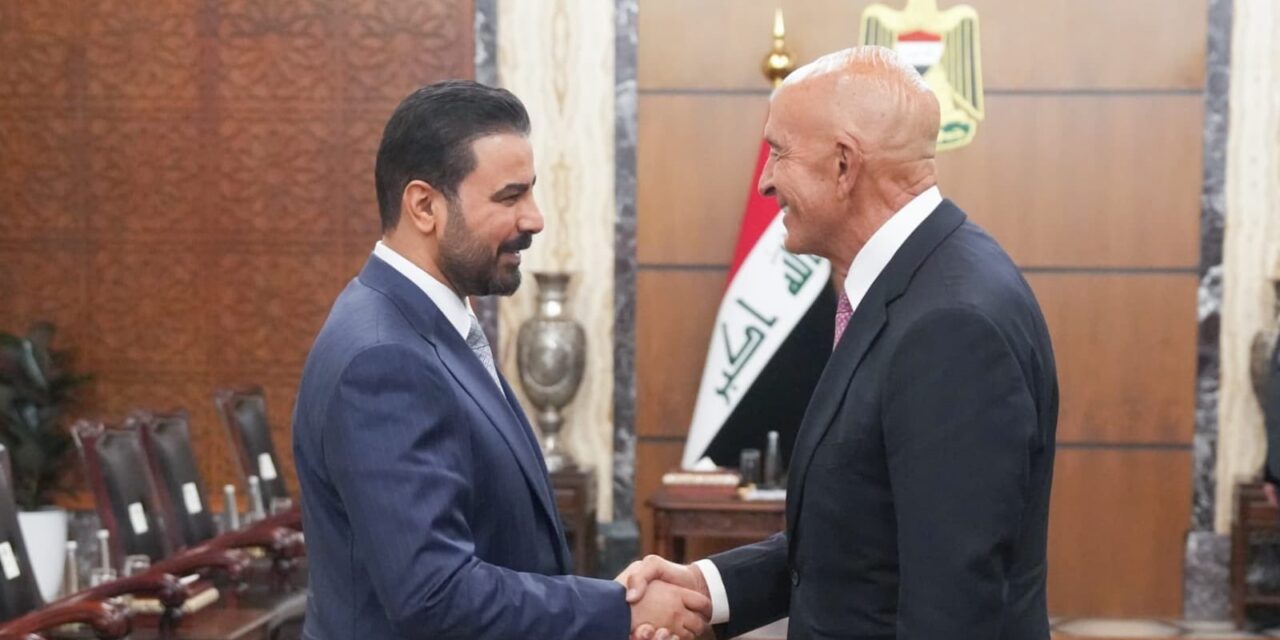
Prime Minister Ali Al-Zaidi’s highly anticipated visit to Washington this week has inevitably raised expectations in Iraq. Such visits are often portrayed as pivotal moments capable of delivering a strategic reset to the bilateral relationship and ushering in a new chapter between Baghdad and Washington. Yet history suggests that these expectations are frequently misplaced.
The trajectory of US-Iraq relations has rarely been determined by these high-level visits. Rather, it is broader regional developments and their impact on Iraq’s security environment and domestic politics that have shaped how the US deals with Iraq. So while Zaidi’s engagements, and the photo opportunities that come with them, will attract considerable media attention, their significance should not be overstated.
Since the withdrawal of US combat forces in 2011, Washington has largely viewed Iraq through the prism of its adversarial relationship with Iran. Iraq is seldom treated as a strategic issue in isolation. Instead, US policy towards Iraq is predominantly shaped around countering Iranian influence, regional security, and the broader balance of power in the Middle East.
This is precisely where much of Baghdad’s current thinking around how to elevate its relationship with the Trump administration risks becoming detached from reality. The popular belief among Iraq’s political class and policymakers is that expanding economic and commercial ties with the United States can fundamentally reshape Washington’s perception of Iraq and shift the bilateral relationship beyond security concerns. Certainly, the Trump administration has consistently emphasised trade and investment as key pillars of foreign policy. But assuming that Iraq can replicate the approach employed by Gulf states to win Trump’s favour misunderstands both Iraq’s economic position and the nature of US strategic priorities.
Saudi Arabia, the UAE and Qatar have leveraged enormous sovereign wealth to underpin their relationships with Washington through investments and defence procurement worth hundreds of billions of dollars. Iraq simply does not possess comparable financial capacity. Nor can it realistically expect commercial agreements to displace the geopolitical considerations that have dominated American policy towards Iraq for two decades.
Moreover, even America’s Gulf partners continue to face strategic misalignment with Washington, as demonstrated by the way the war with Iran has unfolded. Economic engagement can build goodwill, but it cannot bridge the gap between what Iraq seeks from the United States and what Washington expects from Iraq.
A second assumption underpinning much of Iraq’s foreign policy discourse is the notion of “balancing” relations between Washington and Tehran. The term has become a fixture of Iraqi political rhetoric, yet remarkably little attention has been paid to what it actually means.
Does balancing imply giving equal diplomatic attention to both capitals? Should trade volumes be kept in rough parity? Must successive Iraqi governments ensure that neither side feels disadvantaged? Or does it simply mean avoiding actions that visibly favour one over the other? The concept has become so ambiguous that it risks losing any meaningful strategic value.
More importantly, balancing has often evolved into a performative exercise in symmetry rather than a coherent pursuit of Iraq’s national interests. Last year provided perhaps the clearest illustration of this problem.
In April 2025, Iraq hosted the largest business mission ever organised by the US Chamber of Commerce, bringing together one hundred representatives from more than sixty American firms. The visit culminated in a series of memorandums of understanding, including plans for power generation projects amounting to approximately 24,000 megawatts.
The significance extended beyond commercial ties. At a time when Washington was increasing pressure on Iraq to reduce its dependence on Iranian electricity and gas, including rescinding the sanctions waiver that had allowed Iraq to pay Iran for electricity imports, the agreements appeared to signal an effort to deepen strategic energy cooperation with the United States.
Yet only a week later, an Iranian delegation visited Baghdad. Iraqi Oil Minister Hayan Abdul Ghani met his Iranian counterpart, and the two sides signed additional memorandums of understanding covering energy cooperation and technical collaboration.
There is nothing inherently contradictory about Iraq maintaining productive relations with both Washington and Tehran, nor does strengthening one partnership necessarily require weakening the other. The problem is one of strategic coherence. If deepening energy cooperation with the United States is intended to signal a gradual reduction in Iraq’s dependence on Iran and a strengthening of strategic ties with Washington, signing energy agreements with Tehran only days later inevitably undermines that message.
Rather than convincing either capital that Iraq is pursuing an independent foreign policy, this style of balancing often reinforces the perception that Baghdad is continually trying to reassure whichever side most recently felt overlooked. One symbolic gesture effectively neutralises the strategic signalling of the previous one. The result is an incoherent foreign policy, where Iraq’s efforts to cultivate stronger bilateral partnerships are undermined by the contradictory messages conveyed through the nature and sequencing of its engagements.
Ultimately, Iraq’s aspiration for the US to deal with it as a sovereign actor rather than as an extension of Iran cannot be achieved simply by alternating between American and Iranian engagements. Washington’s approach to Iraq is shaped by wider regional realities that Iraq alone cannot control.
Indeed, the uncomfortable truth is that Iraq’s room for manoeuvre will remain constrained so long as US-Iran relations remain fundamentally hostile and adversarial. No amount of diplomatic choreography in Baghdad can fully compensate for a rivalry between two states whose competition is being played out on Iraqi territory.
Under such conditions, Iraqi leaders should be guided by whether the country’s foreign policy advances Iraq’s long-term strategic objectives. If the country’s overriding objective is to build a peaceful, prosperous, and resilient state capable of sustaining stability and prosperity across generations, then every external relationship should be evaluated against that benchmark.
That requires recognising that the greatest impact Iraqi leaders can have on the country’s future lies not in foreign policy, but in the domestic sphere. No volume of foreign investment can substitute for a stable democratic political order that can be sustained over the long run. No diplomatic initiative can compensate for weak institutions. No external partnership can deliver prosperity where corruption remains systemic and the rule of law is selectively applied.
Nevertheless, Prime Minister Zaidi’s visit to Washington can provide an opportunity for a frank discussion about Iraq’s long-term strategic direction and the role it envisages for the United States within it. Such a conversation will need to be underpinned by meaningful confidence-building commitments from both sides, rather than measured by the number of memorandums of understanding signed.
Achieving a genuine strategic reset will require skilled diplomacy and, above all, a compelling vision for the kind of country Iraq’s leaders seek to build, one that can convince the United States, Iran and the wider region to invest in its success.

Ali Al-Mawlawi
Ali Al-Mawlawi specialises in Iraq’s political economy and governance reform.