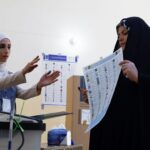
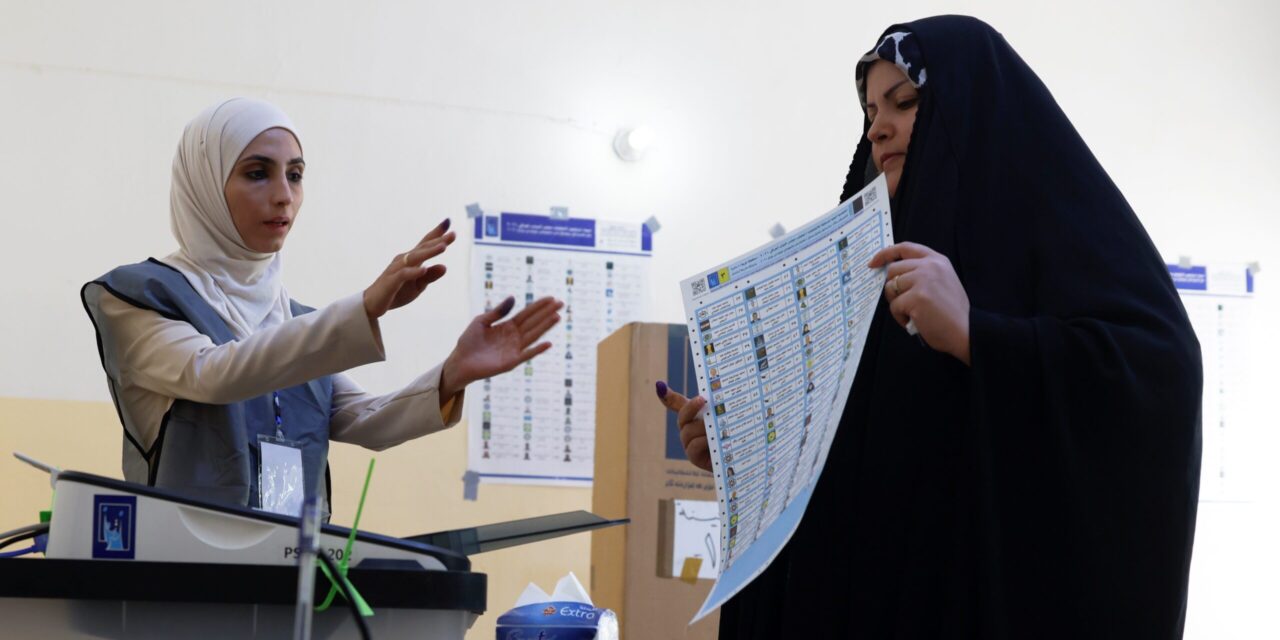
(Photo: A woman votes at a polling station during the parliamentary elections in Karbala, 2021. REUTERS/Abdullah Dhiaa Al-deen)
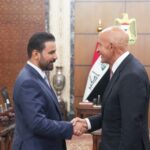
On April 27, Iraq took an important step towards resolving its months-long political deadlock by choosing a prime minister-designate. The Coordination Framework selected Ali Al-Zaidi, after months of internal deliberations and foreign intervention, to form the next cabinet for the coming four years. However, his nomination highlighted serious flaws in Iraq’s political system, and many observers expressed disappointment not only with the choice itself, but with the political system altogether.
One reason for the surprise is that Al-Zaidi is not a politician, but rather a successful businessman. In Iraq, this is not necessarily viewed positively. While it is not uncommon in established democracies for figures from the business world to enter politics, in Iraq successful businessmen are often associated with corruption. Wealth accumulation in Iraq is frequently linked to government contracts obtained and executed through corrupt practices.
Al-Zaidi is also not a household name in Iraq. Few people can say they have heard him speak, let alone debate issues that concern the public.
Iraqi law does not prohibit choosing a candidate who has not run in elections or who exists outside the formal political system. However, since 2018 Iraqis have grown increasingly disgruntled with the relatively new norm of selecting prime ministers who are not elected MPs. Implicitly, Iraqi citizens hope to see the MPs they choose become their representatives in government.
Still, previous candidates were at least former officials. With Zaidi, even that norm has been broken. An already fragmented political system that no longer produces government officials even from within its own fragments further reduces public influence over the country’s future. As voter turnout increased in the previous elections, this development is likely to deal another significant blow to participation.
These recent developments do not send a positive message about the health of Iraq’s democracy. Yet, from a systems perspective, they should not come as a surprise.
One mistake many people make is believing that systems, including democratic systems, have always existed in their current effective and successful form. All systems require maintenance. Otherwise, they gradually decay through a process of institutional atrophy, unless counteracted by forces of renewal and adaptation often described in systems theory as ‘negentropy’. Iraqis cannot expect the current system to function effectively without gradually reforming it through the implementation of safeguards and long-neglected laws and institutional structures. Any form of systemic development, whether positive or negative, takes time before its effects become fully visible. This phenomenon is often referred to in systems thinking as a ‘delayed response’.
Just as the peaceful transfer of power over the past two decades eventually contributed to relative stability in the country, other aspects of the system, such as the excessive flexibility of election-related laws, have gradually begun to generate problems. These laws were originally designed to accommodate Iraq’s realities twenty years ago. As the system adage goes, “today’s problems come from yesterday’s solutions”. However, in the last six years Iraqi decision-makers have started to use legal loopholes to find quick and temporary fixes to cover up deeper structural issues, another phenomenon in systems thinking known as ‘shifting the burden’. If decision-makers become addicted to treating symptoms instead of addressing root causes, these short-term fixes will become progressively less effective, while the opportunity for meaningful systemic reform will gradually disappear.
One of the most important lessons from systems thinking is the principle that “the purpose of a system is what it does, and not what it claims to do”. If Iraqis witness negative developments in the country, these outcomes reflect the system as it currently operates. Complaining about politicians alone is therefore insufficient, because they rose to power through that same system. Simply replacing them is unlikely to produce substantial change, as similar politicians will continue emerging through the same structures. What matters more is reforming the underlying purpose of the system and the relationships between its various components, most importantly the relationship between citizens and officials.
One potentially necessary and effective reform would be requiring every cabinet official to be a sitting MP, like the Westminster system. Such a reform would narrow the pool of candidates for senior government positions, potentially reduce lengthy negotiation processes, and give voters greater agency in determining who ultimately governs them.
What Iraq’s democracy needs is not election boycotts or public disengagement. Rather, it requires greater participation that pushes for meaningful reforms and sustained pressure against unlawful and unethical practices that undermine the effectiveness of the current political process.
Muhammad Al-Waeli
Muhammad Al-Waeli is an analyst, who comments on issues of authority, policy, and institutions in Iraq.