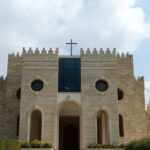
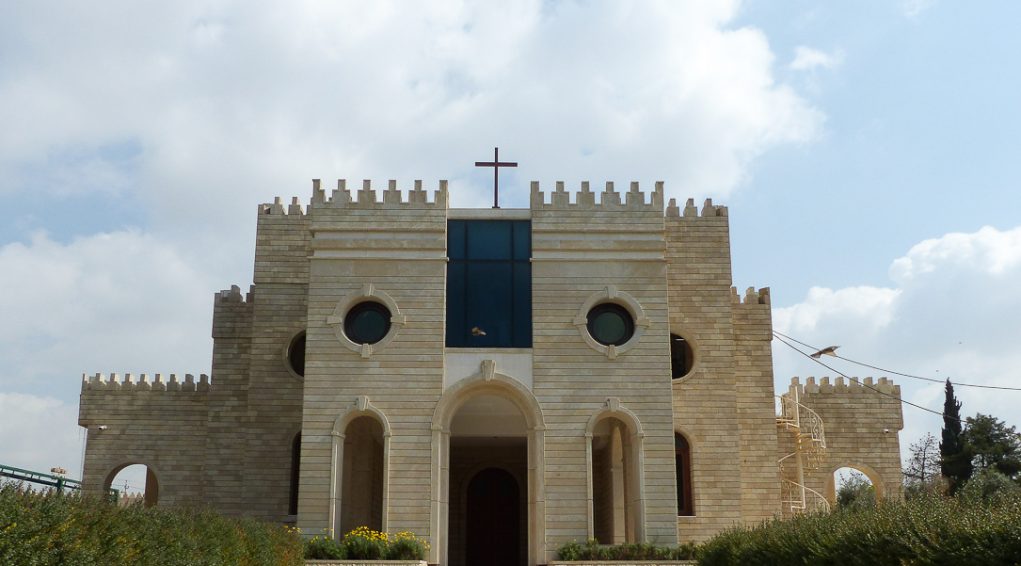
(Photo: Cathedral of Mar Youssef in Ankawa, Iraqi Kurdistan/Mesopotamia Heritage)
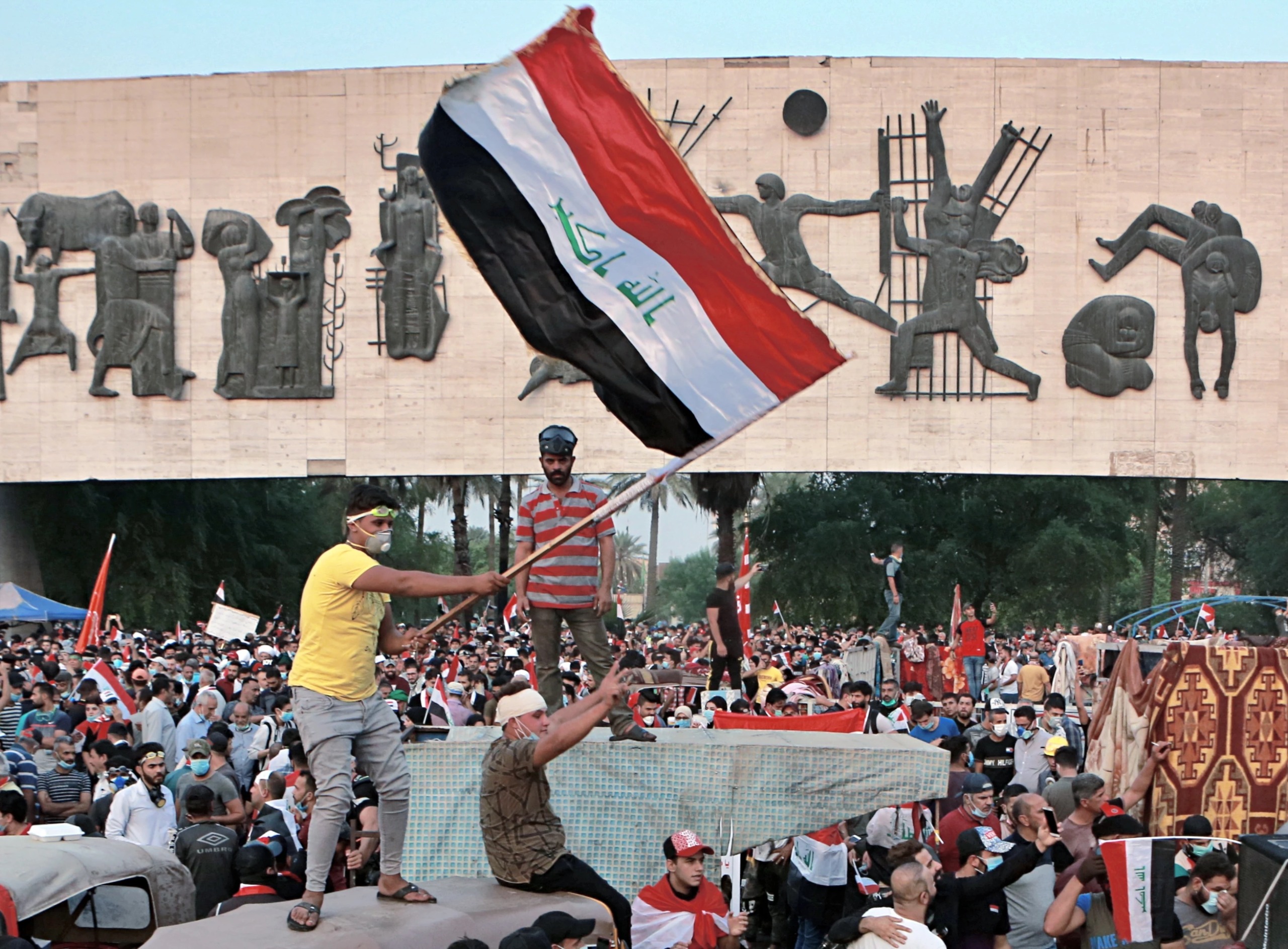
Before ISIS swept through Iraq in 2014, humanitarian efforts rarely considered how unequal treatment between religious groups affected people’s safety. Ignoring it meant overlooking long-standing inequalities and contributing to repeated displacement of communities such as Yazidis and Christians. For Iraq to build a future that protects freedom of religion, it must adopt an inclusive national identity. It cannot treat this only as a minority rights issue.
This article looks at how Iraq’s approach to religious freedom has changed and what Syria, especially the Kurdish-administered areas, should pay attention to. Renewed hostilities in Northeast Syria (NES) in early 2026 have again shown how quickly religious and ethnic minorities become vulnerable, making the lessons from Iraq, especially the Kurdistan region of Iraq (KRI), even more relevant, as both countries share a recent history of authoritarian rule and sectarian conflict. In January 2026 alone, fighting displaced over 190,000 people in NES, most of them women and children amid power cuts and service disruptions. A series of ceasefires on January 18, January 20, and January 22 have partially reduced clashes, and control of several towns shifted during the northeastern Syria offensive, deepening uncertainties for minority groups.
Why Religious Freedom Matters in Humanitarian and Development Work
Religious equality is not a standalone issue. It shapes who can access documents, services, schools, and safe spaces. Being religion-aware (including faith voices) is different from being Freedom of Religion and Belief (FoRB)-sensitive (addressing unequal treatment between and within faith and non-faith groups). FoRB-sensitive work is harder and prevents new cycles of exclusion and displacement. Traditional secular development programs in Iraq largely missed this point, Jeremy Barrker, Associate Vice President, International Strategies at the Religious Freedom Institute (RFI) emphasized to me that religious freedom in Iraq cannot be sustainably protected through minority‑specific measures alone, noting that “religious freedom for one community is best protected by a law that protects religious freedom for every community”. Iraq has begun adopting FoRB principles, but it is too late to prevent the long‑term harm already experienced by many minority communities, largely as a corrective action rather than early prevention. This is a mistake Syria cannot afford to repeat.
A freedom of religion approach means that safety and fairness must be clear and measurable. It begins with early checks to identify which groups might be excluded because of faith or belief. It also requires identifying legal barriers such as registration rules, personal status laws, property problems and daily risks such as harassment or profiling at checkpoints. Programs should measure inclusion rather than only counting outputs. This includes tracking access to civil documents, safe places of worship, fair distribution of aid and complaint systems that people trust and can use. Working with local faith actors can be helpful and require careful planning. Schools also play a key role. Teaching materials and classroom practices should avoid harmful messages and support equal citizenship for all students.
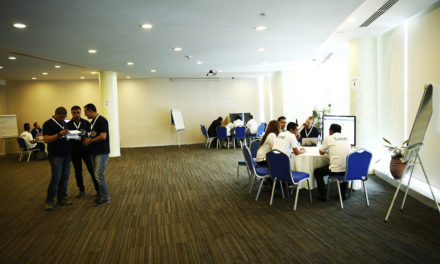
I spoke with Ano Abdoka, the Kurdistan Regional Government’s (KRG) Minister of Transport and Communication and Head of the Christian Alliance, about what has worked in the KRI. He highlighted roundtables that brought faith leaders, academics, activists, officials and media together as a positive approach. He also said follow up needs to be stronger, and that clergy training is needed. Ano stressed the importance of freedom of religion in school curricula and the regular recognition of individuals and institutions that support religious freedom.
Hedi Sarkar from the Alliance of Iraqi Minorities Network explained that programs worked best when the correct stakeholders were involved. However, many efforts were short lived or focused too heavily on dialogue instead of policy change. Some initiatives avoided sensitive political or legal issues which limited their impact on real problems such as property disputes, political quotas influenced by powerful parties, documentation barriers and conversion cases. He also noted that not everyone had a meaningful role in designing programs. This lack of coordination led to repetition, fatigue and the same voices appearing repeatedly in policy spaces.
Muna Yaqo, Head of the Human Rights Commission in the KRG, supported Hedi’s points and explained why advocacy often fails to bring about policy change. She said this happens for two reasons. First, minority groups often approach minority parliamentarians who are not fully independent from the influence of the majority. Second, these groups sometimes hold expectations that do not match the realities of Iraqi society, and constitution which stipulates that no legislation may contradict Islamic principles.
According to Ano, the initiatives used in the KRI can also work in democratic or semi-democratic settings, including the Kurdish administrated areas. Hedi adds that programs in NES should be designed and led by local minority actors, rather than created for them without their participation. Muna hopes that minority communities in NES, and those arriving there, will not adopt a quota system dominated by factional interests.
Iraq and Syria: KRI and NES
In Iraq, rushed reforms and interference from regional and western powers, many of which did not know how to handle religion, pushed freedom of religion aside. Violence against minorities was sometimes framed as resistance by targeting civilians, state institutions, and minority communities. This was largely carried out by former Ba’athists and regionally backed extremist groups seeking to destabilize the emerging political order. These actors claimed they were fighting foreign occupation, but in practice their attacks harmed Iraqis themselves, a dynamic that weakened pluralism after 2003. Syria faces a similar situation today, even after leadership changes and the defeat of ISIS, progress on protecting minorities has been slow. Attacks on mosques, churches, and other places of worship have renewed fears. Christians, Yazidis, Druze and Alawites are still unsure of their future.
In 2026, advancements in NES and the KRI could prove that religious freedom can work in countries emerging from civil wars. Both regions have become relatively safe havens for minorities fleeing violence elsewhere. In Kurdish Administrated areas in Syria, there’s an opportunity to learn from the KRI, which has introduced practical programs like legal recognition pathways, and accredited schools and universities open to all faiths, and made significant efforts to curb hate speech, like the Friday Prayer Committee, which gives mosques three approved sermon topics each week.
What Does it Take to Feel Safe?
Religious freedom is not only a moral good, but a stabilizing force in societies emerging from sectarian violence. For policymakers, donors, and humanitarian leaders working in Syria, the lesson from post-2003 Iraq is clear: religious freedom cannot be postponed until stability arrives, it is one of the conditions that makes stability possible. When aid programs overlook how religion shapes daily life, they often end up deepening the very inequalities they’re trying to address. Reforms also struggle to move forward when the political and legal issues tied to religion are not fully understood. Advocacy can fall flat if it does not reflect the realities of how power actually works on the ground. And when representation is organized through quota systems, those spaces are easily dominated by the strongest actors, leaving smaller communities with little real influence.
In Syria’s Kurdish administrated areas, just like the Kurdistan region of Iraq this means embedding Religious Freedom early into education, documentation systems, and local governance before exclusion hardens into grievance. Donors should condition support on measurable inclusion, not just service delivery; humanitarian actors should move beyond dialogue toward institutional change; and local authorities must resist quota systems that invite capture rather than protect pluralism measuring inclusion in real, everyday terms. If Iraq shows the cost of treating religious freedom as a secondary concern, Syria still has a narrow window to prove that it can be foundational instead.

Maryam Sryoka
Maryam Sryoka is the Program Partnerships Advisor for Iraq and Syria at DanChurchAid Iraq, specializing in program development, grants management, and strategic partnerships. She brings years of experience in designing and implementing initiatives that empower women and girls, with a strong focus on localization and donor engagement across the MENA region and Europe. The views expressed here are her own.